


Price :
QTY :
CART TOTALS :
There are items
in your cart
CART TOTALS :
Let's be honest: no, anti-aging skincare isn't just for mature skin. It's not about hiding or fighting, but about supporting the skin in its natural evolution. Anti-aging skincare is, above all, preventative care, supporting the skin's vital functions: hydration, protection, and regeneration. So, when should you incorporate these steps into your routine? Here's a breakdown by age group and skin's needs.
There's no need to resort to overly active firming creams. The goal is to help your skin stay in shape for as long as possible. This involves simple, natural steps:
gentle cleansing
daily hydration with plant-based active ingredients
systematic sun protection
We rely on natural antioxidants (vitamin C, white tea, aloe vera) to limit the effects of free radicals. The important thing at this age is the prevention of skin aging, not its correction.
This is often when the skin begins to show signs of fatigue: more pronounced dark circles, a less radiant complexion, and small dehydration lines. This isn't yet serious aging, but cell renewal is slowly slowing down. We can introduce so-called "pre-anti-aging" treatments to support the skin's natural functions.
Treatments based on plant-based hyaluronic acid or oils rich in omega 3 and 6 are ideal. The eye contour becomes essential if puffiness or fine lines appear. Gentle scrubs are also recommended to boost radiance and refine skin texture.
The skin gradually loses elasticity and collagen production decreases. This is a pivotal period where we move from prevention to gentle correction. Anti-aging treatments become more targeted, but always respectful of skin balance.
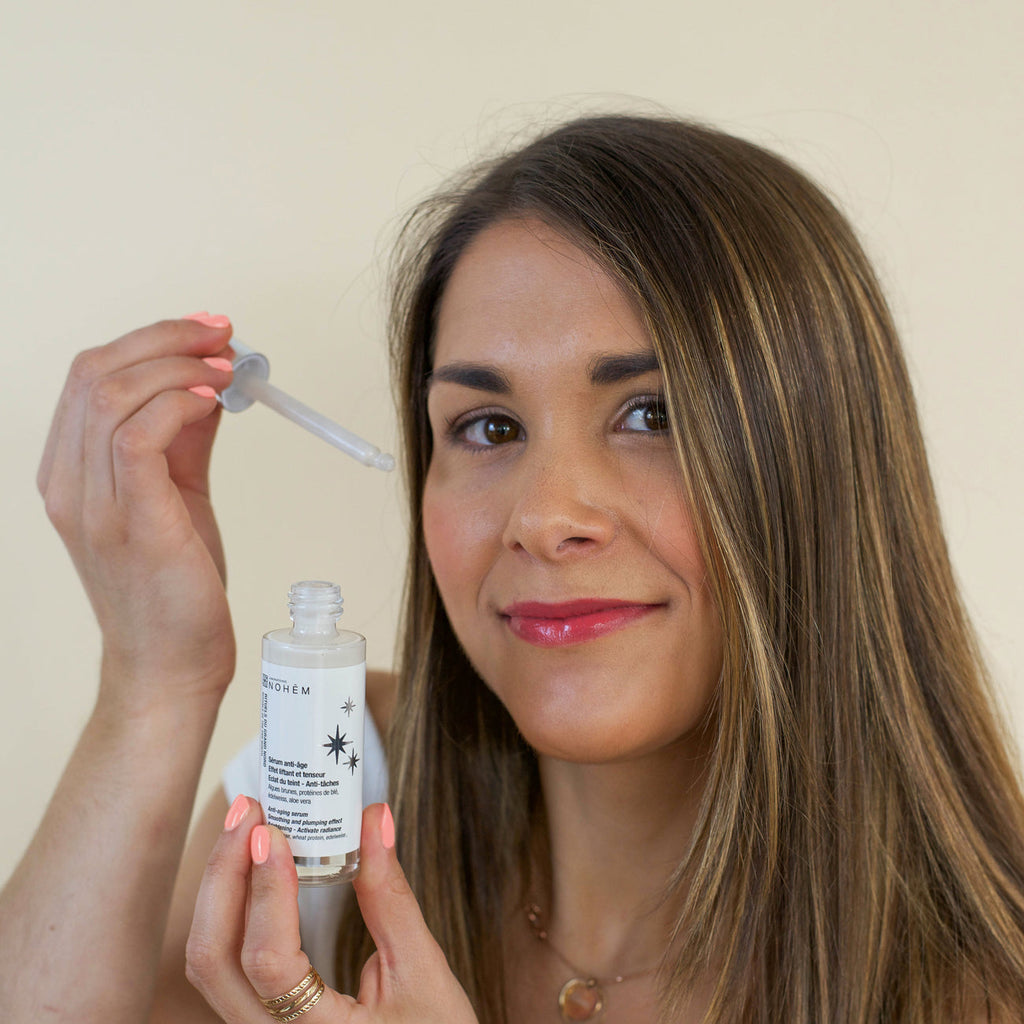
We introduce serums with concentrated active ingredients , firming day creams, and restorative night creams. Active ingredients to watch out for: hyaluronic acid, peptides, redensifying botanical extracts, and antioxidant plant oils. Facial massage, gua sha, or self-drainage can also be part of the routine.
Wrinkles set in, firmness diminishes, and skin tone can become more uneven. It's not about smoothing at all costs, but about supporting skin in the midst of transformation. Skincare products become richer, more nourishing, and target the specific needs of each skin type.
Choose formulas that strengthen the skin barrier, boost natural collagen production, and preserve density. Professional salon treatments, weekly masks, and plant oils are valuable allies. Here again, a consistent and gentle routine remains the best approach.
There's no universal age to start anti-aging skincare. Some skin types show signs of ageing early, while others remain toned for a long time. The only reliable indicator is how you feel. Tightness, loss of radiance, fine lines? These are the signs. Observing your skin, adapting your routine, and choosing products that respect your physiology: this is the true anti-aging strategy.
Starting anti-aging skincare isn't about anticipating aging; it's about supporting life. Every skin ages at its own pace, and every action counts. It's not about overdoing it, but about doing it right. With natural products, a consistent routine, consistency, and respect. Because skin that's well supported is skin that ages well. Quite simply.

Your shopping bag is empty
Go to the shop